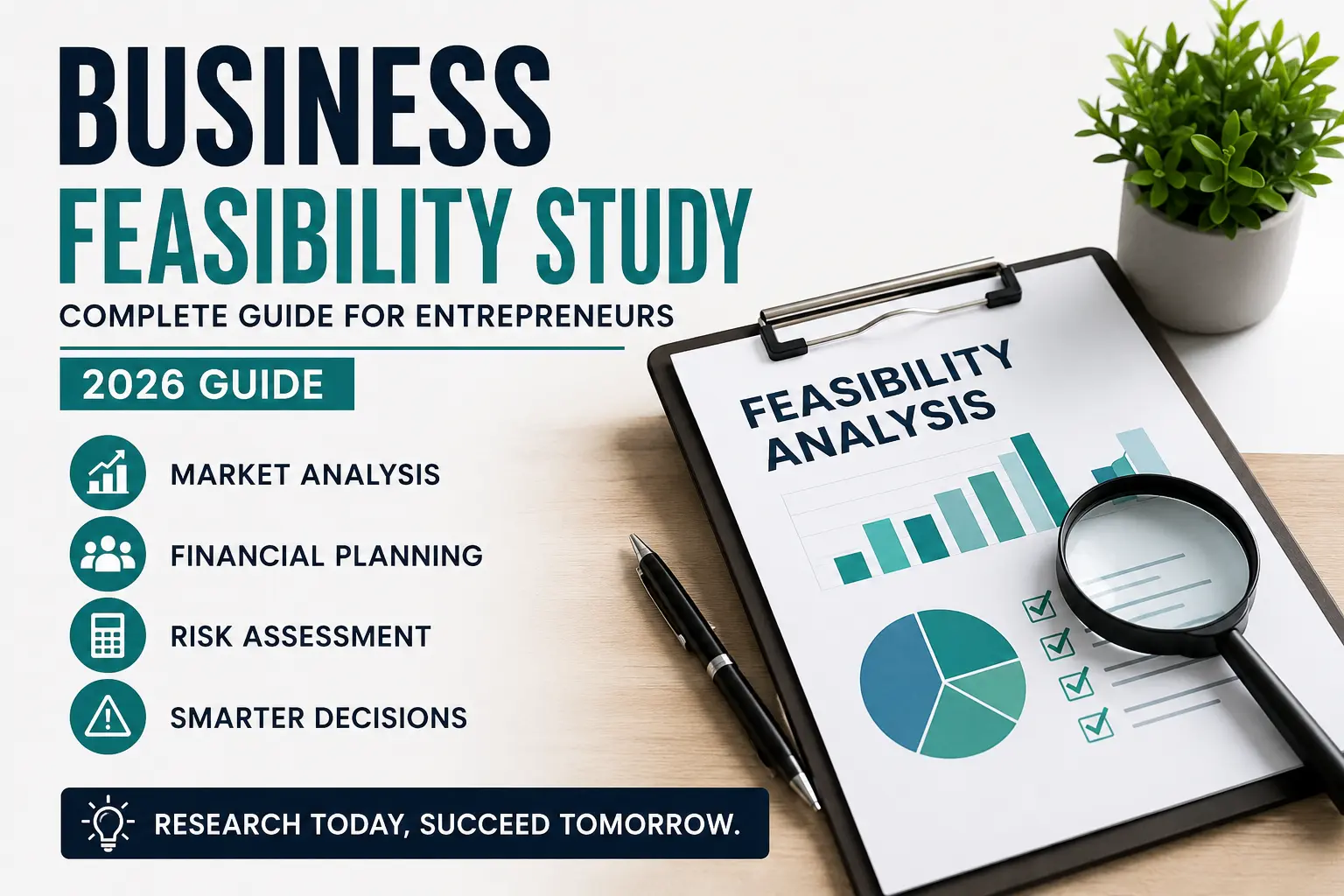
Starting a business without conducting a business feasibility study is like constructing a building without checking whether the land can support it.
Many entrepreneurs spend months developing products, investing money, and creating marketing plans—only to discover that the market doesn’t need what they’re selling.
A business feasibility study helps you answer one simple but critical question:
“Is this business worth pursuing?”
This guide explains everything you need to know before investing your time, effort, and money.
What is a Business Feasibility Study?
A business feasibility study is a structured evaluation that determines whether a business idea has the potential to become profitable and sustainable.
Instead of relying on assumptions, a feasibility study uses research, market data, customer insights, and financial analysis to support business decisions.
Its objective is to reduce uncertainty before significant investments are made.
Why Every Entrepreneur Needs a Feasibility Study
Many businesses fail because founders become emotionally attached to their ideas.
Successful entrepreneurs, however, rely on evidence.
A feasibility study helps you:
- Understand market demand
- Identify target customers
- Evaluate competitors
- Estimate profitability
- Calculate startup costs
- Identify business risks
- Improve decision-making
- Increase investor confidence
The goal isn’t to prove your idea is perfect—it’s to determine whether it’s commercially viable.
Key Components of a Business Feasibility Study
1. Market Feasibility
Determine whether customers actually need your product or service.
Research should answer questions such as:
- Is there sufficient demand?
- Who are the competitors?
- What problems do customers face?
- Are customers willing to pay?
Without demand, even the best product is unlikely to succeed.
2. Technical Feasibility
Evaluate whether you have the resources to build and deliver your product or service.
Consider:
- Manufacturing capabilities
- Required technology
- Supplier availability
- Equipment
- Skilled workforce
- Operational requirements
3. Financial Feasibility
Estimate:
- Startup investment
- Monthly operating costs
- Revenue projections
- Break-even point
- Profit margins
- Cash flow
A business that generates sales but not profits isn’t sustainable.
4. Operational Feasibility
Assess whether your business processes can support long-term growth.
Evaluate:
- Logistics
- Inventory management
- Customer support
- Delivery systems
- Team requirements
- Daily operations
5. Legal Feasibility
Ensure your business complies with applicable regulations.
Review:
- Business registration
- GST requirements
- Licenses
- Industry regulations
- Intellectual property
- Tax obligations
Common Mistakes Entrepreneurs Make
Many founders skip feasibility studies because they believe:
- Their idea is unique.
- Friends liked the concept.
- Competitors already exist.
- The market is huge.
None of these assumptions guarantee success.
Only structured analysis can validate a business opportunity.
Business Feasibility Checklist
Before investing, ask yourself:
✔ Is there genuine market demand?
✔ Who is my target customer?
✔ What problem am I solving?
✔ How strong is the competition?
✔ What makes my business different?
✔ Can the business become profitable?
✔ What are the biggest risks?
✔ Do I have enough capital?
✔ Can I scale this business?
✔ What is my long-term strategy?
DoctorBizz Insight
Many entrepreneurs focus entirely on product development while ignoring business validation.
Successful businesses begin with research—not assumptions.
Investing a few days in structured analysis can save months of costly mistakes.
Conclusion
A business feasibility study provides clarity before commitment.
It helps entrepreneurs identify opportunities, understand risks, and make informed investment decisions.
Whether you’re launching a startup, opening a retail store, starting an online business, or introducing a new product, conducting a feasibility study significantly improves your chances of success.
Research first.
Invest later.
Frequently Asked Questions
What is a business feasibility study?
A business feasibility study evaluates whether a business idea is practical, profitable, and sustainable before investment.
Why is a feasibility study important?
It reduces financial risk, improves planning, and helps entrepreneurs make evidence-based decisions.
Who should conduct a feasibility study?
Anyone planning to start a business, launch a new product, or expand into a new market.
Can a feasibility study prevent business failure?
While no analysis guarantees success, it helps identify major risks before significant investments are made.
Business Success Begins With Better Decisions
The difference between successful businesses and failed businesses isn’t luck—it’s the quality of their decisions.
At DoctorBizz, we help entrepreneurs and business owners reduce uncertainty through structured business diagnostics, in-depth analysis, and practical strategic insights.
Whether you’re planning your first business, improving an existing product, or building a stronger business foundation, we’re here to help.
Choose the solution that fits your business journey.
Business Feasibility Scan
Perfect for entrepreneurs validating a new business idea before investing.
Product & Service Analysis
Designed for existing businesses looking to improve performance, profitability, and growth.
Explore Bold & Brutal
Learn practical business strategies from our India-focused digital playbook for founders and sellers.
Whether you’re planning your first business, improving an existing product, or building a stronger business foundation, we’re here to help.
Choose the solution that fits your business journey.
Perfect for entrepreneurs validating a new business idea before investing.
Designed for existing businesses looking to improve performance, profitability, and growth.
Learn practical business strategies from our India-focused digital playbook for founders and sellers.